Tuesday, 4 November 2014

PART 1

Production

    1)  What are the stages involved in producing a film – what do they include from the early idea to the final edit when the film is ready to be sold to cinemas and promoted to the public?

Ø  Pre-production: this is where all the planning of the project takes place. If the script is not already written it will be done at this stage. During pre-production, the production is broken down into individual scenes and all the locations, props, cast members, costumes, special effects and visual effects are identified.
Ø  Production: the film is carried out at this stage. All the scenes that were planned out in pre-production will be filmed at the right and relevant locations. Each scene is filmed as many times the director wants, to make sure the scene is well recorded and has the best quality which will be used to create the film. Great care must be taken to make sure that all the filming is done correctly and all necessary shots are taken, as it is sometimes difficult or impossible to go back and repeat certain events if the filming is incomplete when it comes to the post-production stage.

Ø  Post-production: this is where all the editing part takes place by of course the editor. The unwanted parts of the scenes are take out in order to have the best shots. The next part is to create a fine cut by getting all the shots to flow smoothly in a seamless story. Trimming - the process of shortening scenes by a few minutes, seconds, or even frames - is done during this phase. As well as the editing of footage, all music, graphics, menus etc. are added in this stage. After the fine cut has been screened and approved by the director and producer, the picture is "locked," meaning no further changes are made.

2)     Who are the main producers of films in America?

Ø Steve Spielberg


Ø  Robert Zemeckis

Ø  George Lucas

2b) Try to find out the names of the main studious and who owns them.

  • Warner Bros. Entertainment Inc.
           Owned by: Time WarnerWarner Bros logo.svg

  • Walt Disney Pictures
          Owned by: The Walt Disney Company
Walt Disney Pictures logo

  • Columbia Pictures Industries, Inc.
          Owned by:Sony since 1989
Columbia Pictures (logo).jpg

  • Twentieth Century Fox Film Corporation
           Owned by: 21st Century Fox since 2013

  • Paramount Pictures Corporation 
Owned by: Viacom since 2006
Paramount Pictures logo (2013).jpg


3)      How might the ownership of the studio have an impact on what films the studio makes?

The ownership of the studio will determine the number of options for the type of films, scenarios and the way they will film. It can also influence the quality\ price.

4)      What is independent production?
  • Ø  Is a professional film production resulting in a feature film that is produced mostly or completely outside of the major film studio system. In addition to being produced and distributed by independent entertainment companies, independent films are also produced and/or distributed by subsidiaries of major film studios.

Sunday, 2 November 2014


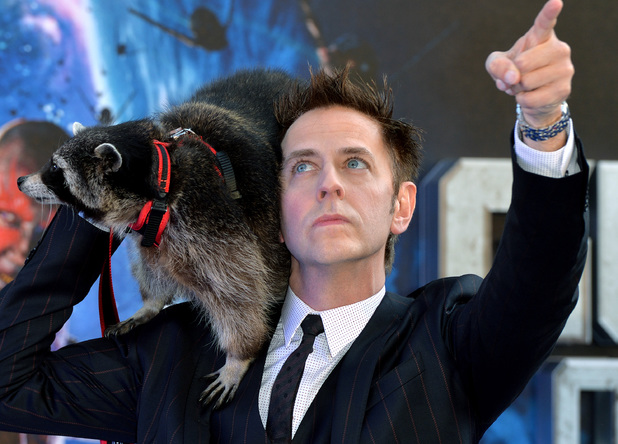
The world premier of Guardians of the Galaxy was held on July 21, 2014, at the Dolby Theatre in Hollywood. This was an hugely anticipated film, and this meant the marketing of the film was meant to be very cleverly crafted. The film was released in cinemas in the United Kingdom on July 31, 2014 and the 1st of August in the United States.

https://www.youtube.com/watch?v=wN10QltBBtE 
 They produced a teaser trailer which makes it very clear that they are wanting to get the audience to really get excited for the film and  gradually, day by day get closer to seeing the film.


There were several teaser trailers before the actual full trailer, this meant the intrigue for the film was trailed for longer to create a big buzz.

The Stars


The Stars
zoe-saldana-guardians-of-the-galaxy
Zoe Saldana

The skilled assassin character sports green skin and is that last of her species, which was exterminated by a race known as the Badoon.  More interestingly, though, is the fact that the character was raised and trained by super-villain Thanos before eventually turning against him.


Chris Pratt


Chris Pratt plays the film's wisecracking space cowboy Peter Quill (aka "Star-Lord") who is as deadly accurate with a one-liner as he is with his trusty "element gun."Casting director Sarah Finn suggested Pratt to Gunn, who dismissed the idea despite struggling to cast that role. Despite this, Finn arranged for a meeting between the two, at which point Gunn was immediately convinced that Pratt was perfect for the role.


Dave Batista


A warrior in search of vengeance against Ronan for killing his family. Bautista's make-up took approximately four hours to apply, though it could be removed in just 90 minutes. The character, Drax has various scarring patterns on his body, which replace the simple tattoos from the comics, each having a specific story. Additionally, his skin tone was changed from the bright green in the comics to a muddier grey, to avoid visual similarities to the Hulk.


The Production

Guardians of the Galaxy is a 2014 American film by the company Marvel and it was produced by Marvel Studios and distributed by Walt Disney Studios Motion Pictures.

The production of the film was first mentioned to be created in the year 2010, however the actual production of it was not yet planned or ready. As the years passed they decided to try to create a movie which has similar characters like from The Avengers.
From the Marvel Studio, who created, Thor, Iron Man, The Avenger and many more, The Guardians of the Galaxy is a new creation fit for the upcoming generation.

Director: James Gunn


Budget$170 million
Box office$752.8 million

Special effects make-up designer David White took head and body casts of actors, to experiment with materials used to create the characters. The special effects were very important for this film and had to be very good as it needed to be as good and maybe even better than the other Marvel films. 


The Guardians of the Galaxy


BFI


The BFI is also known as, British Film Industry, the BFI was founded in 1933. They combine cultural, creative and industrial roles, bringing together the BFI National Archive and BFI Reuben Library, film distribution, exhibition and education at BFI Southbank and BFI IMAX, publishing and festivals.
Film Forever is their five year strategic plan for 2012-2017 to support UK film. This is very important for independent films and low budget movies this allows them to receive as much help as possible to make their film liked and known to the British public.

Exchange

Audiences get to see films through: TV, cinema, YouTube, social networking sites, billboards, trailers, magazines, posters around London.
The box office is a place  where tickets are purchased by the public, this means that when you purchase tickets at the cinema it doesn't go the cinema, it goes to the box office and films with high box office ratings means a large sale of tickets by the public.

The box office identify's the success of the film and they measure the amount of profit they have made and as I said the amount of money made through tickets. If the film is successful the money is then shared to the film.
The Cinemas profit is all made from the food and drinks sold, this is therefore why the prices in the cinema is at higher prices than usual, therefore if no sales were made through food and drink, the cinema would close without business. Therefore there are some cinemas that do not allow any food and drinks that is not purchased from the cinema. The cinema also receives money from the on-screen adverts that occur before the movie starts, this is well chosen by the marketers because the audiences are forced to watch it. Therefore if the film is a blockbuster then the cinema would ask for a higher amount of money to play their trailer on- screen.
The cinema has a range of offers such as Orange Wednesdays which is very appealing to many people and 2 for 1 offers. They also offer 3D, 4D screenings.

Home screening, also known as Ancillary marketing, is companies like Netflix, airlines (movies shown before even released in cinemas), and other sources. This allows friends and families to watch feature movies at home without going to the cinema and paying a lot of money. The payment monthly for the different companies is something that is more efficient.